 MetalsAlloy
2007 Aluminum
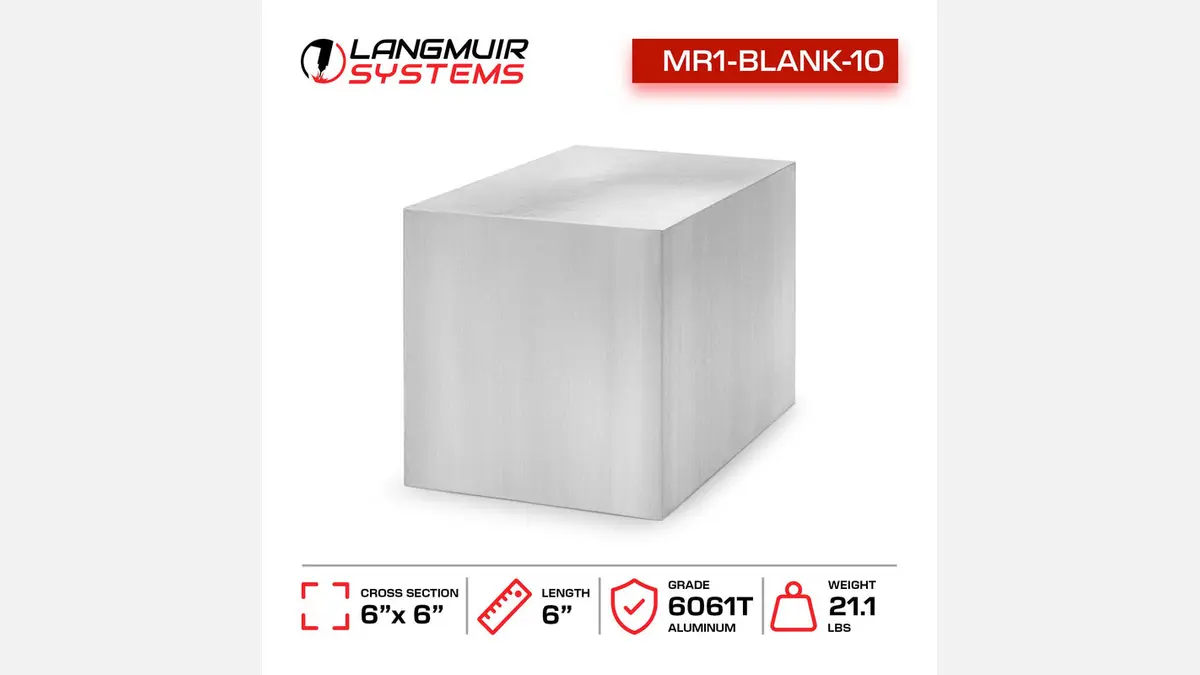
Image Credit: langmuirsystems.com
2007 Aluminum (AA 2007) is a wrought, heat-treatable aluminum–copper alloy developed for high-speed automatic machining. Its relatively high copper content provides useful strength after solution heat treatment and aging, while controlled lead and bismuth additions promote short, easily broken chips and a good machined finish. It is therefore used principally for turned, milled, drilled and threaded precision components rather than for formed sheet structures. Compared with general-purpose 2xxx alloys, 2007 prioritizes machinability; its corrosion resistance, weldability and forming capability are correspondingly more limited.
| Chemical Composition wt.% | ||
|---|---|---|
| Element | Min | Max |
| Silicon | — | 0.80 |
| Iron | — | 0.80 |
| Copper | 4.0 | 5.0 |
| Manganese | 0.40 | 1.0 |
| Magnesium | 0.40 | 1.4 |
| Chromium | — | 0.10 |
| Zinc | — | 0.25 |
| Titanium | — | 0.20 |
| Lead | 0.50 | 1.5 |
| Bismuth | 0.50 | 1.5 |
| Other elements, each | — | 0.05 |
| Other elements, total | — | 0.15 |
| Aluminum | Remainder | |
Composition notes
- Silicon: Maximum limit.
- Iron: Maximum limit.
- Copper: Principal strengthening element.
- Chromium: Maximum limit.
- Zinc: Maximum limit.
- Titanium: Maximum limit.
- Lead: Intentional free-machining addition.
- Bismuth: Intentional free-machining addition.
- Other elements, each: Maximum for each unspecified element.
- Other elements, total: Maximum total of unspecified elements.
Registered wrought-alloy composition limits are in mass percent. Aluminum is the remainder. Lead and bismuth are intentional free-machining additions; their use makes 2007 unsuitable where dependable fusion welding, extensive forming, or highly demanding corrosion performance is required.
The Aluminum Association density table reports a nominal density for designation 2007. Mechanical properties depend substantially on product form, section size and temper; no target-grade mechanical-property values are included here without a cited product-specific source.
| Physical Properties | Metric |
|---|---|
| Density | 2.82 × 10³ kg/m³ |
| Density | 0.102 lb/in³ |
Test conditions & data notes
- Density: Nominal value listed for wrought alloy 2007.
- Density: Nominal value listed for wrought alloy 2007.
Material Conditions & Tempers
AA 2007 is normally supplied in wrought bar, rod and similar stock for machining. Temper selection should be made against the applicable product standard and supplier certification because strength, dimensional response during machining and availability vary with form and section size.
| Condition | Description | Notes |
|---|---|---|
| O | Annealed condition, used where maximum ductility or subsequent forming is more important than final strength. | Not generally the preferred condition for high-production precision machining. |
| T3 | Solution heat-treated, cold worked and naturally aged condition used for wrought products requiring a combination of strength and workable ductility. | Confirm availability for the required product form. |
| T4 | Solution heat-treated and naturally aged condition. | Machining behavior and dimensional stability should be verified for the actual stock size. |
| T6 | Solution heat-treated and artificially aged condition for higher strength. | Applicable availability and certified properties are product-form dependent. |
Advantages & Limitations
| Advantages | Limitations |
|---|---|
|
|
Processing & Fabrication
| Process | Description |
|---|---|
| Machining | Use sharp tooling, positive cutting geometry and chip control appropriate for free-machining aluminum. The alloy is particularly suited to automatic lathes and multi-operation machining because its inclusions encourage chip breakage. |
| Heat treatment | When higher strength is required, use a controlled solution-treatment, quench and aging practice qualified for the specific product form. Distortion and residual stress should be considered for close-tolerance parts. |
| Forming | Limit severe cold forming, especially in strengthened tempers. Where forming is necessary, select an annealed or more ductile condition and validate bend performance on the actual section. |
| Welding and joining | Prefer mechanical fastening or other qualified joining methods. Fusion welding is generally avoided because the free-machining additions and copper-rich composition reduce weldability. |
| Surface protection | For corrosive or outdoor exposure, specify a suitable cleaning and protective finishing system. Design details should avoid persistent moisture traps and galvanic contact with more noble metals. |
Applications
2007 is selected primarily for machined parts rather than broad structural sheet applications. Its value is greatest where high production rates, small complex features and reliable chip control outweigh the need for welding or maximum corrosion resistance.
- Automatic screw-machine parts: The lead–bismuth free-machining additions promote short chips and efficient repeated turning, drilling and threading.
- Precision fittings and threaded connectors: Bar-stock machining can produce fine threads, ports and close-tolerance profiles efficiently.
- Instrument and mechanical components: The alloy supports economical production of small, detailed parts with a good machined finish.
- Hydraulic and pneumatic machined components: Complex passages and threaded interfaces can be machined from wrought stock, subject to service-environment and regulatory review.
- Fasteners and turned hardware: Heat treatment can provide useful strength while retaining the alloy's principal machining advantage.
Standards & Designations
| Designation | Value | Description |
|---|---|---|
| Aluminum Association / International Alloy Designation System | 2007 | Registered designation for a wrought aluminum alloy; chemical composition limits are published in the Aluminum Association Teal Sheets. |
| Aluminum Association | AA 2007 | Common designation form for Aluminum Association alloy 2007. |
| European designation | EN AW-2007 | European wrought-aluminum designation commonly associated with alloy 2007; confirm the governing product standard and delivery condition for procurement. |
Frequently Asked Questions
Why does 2007 aluminum machine so easily?
AA 2007 contains controlled lead and bismuth additions. During cutting these additions help chips break into short pieces rather than forming long, tangled chips, making the alloy well suited to high-volume automatic machining.
Can 2007 aluminum be welded?
Fusion welding is generally not recommended. Its lead and bismuth free-machining additions, together with the copper-rich 2xxx composition, can impair weld soundness and increase cracking risk. Mechanical fastening or another qualified joining method is usually preferred.
Is 2007 aluminum corrosion resistant?
It has limited corrosion resistance compared with many 5xxx and 6xxx aluminum alloys. For outdoor, wet or chemically aggressive service, evaluate the environment and consider a protective finish, sealing strategy, or a more corrosion-resistant alloy.
References & Data Notes
- (n.d.). Aluminum Association — International Alloy Designations and Chemical Composition Limits for Wrought Aluminum and Wrought Aluminum Alloys (Teal Sheets, December 2025). https://www.aluminum.org/sites/default/files/2026-01/Teal%20Sheets%20December%202025.pdf
- (n.d.). Aluminum Association — Designations and Chemical Composition Limits for Aluminum Alloys in the Form of Castings and Ingot (Pink Sheets, August 2025). https://www.aluminum.org/sites/default/files/2025-10/Pink%20Sheets%202025.pdf
Composition limits and density are cited to the Aluminum Association registration record. Values in this page are not a substitute for a product-standard requirement, mill test certificate or supplier temper-specific datasheet.