 MetalsAlloy
A380.0 Cast Aluminum
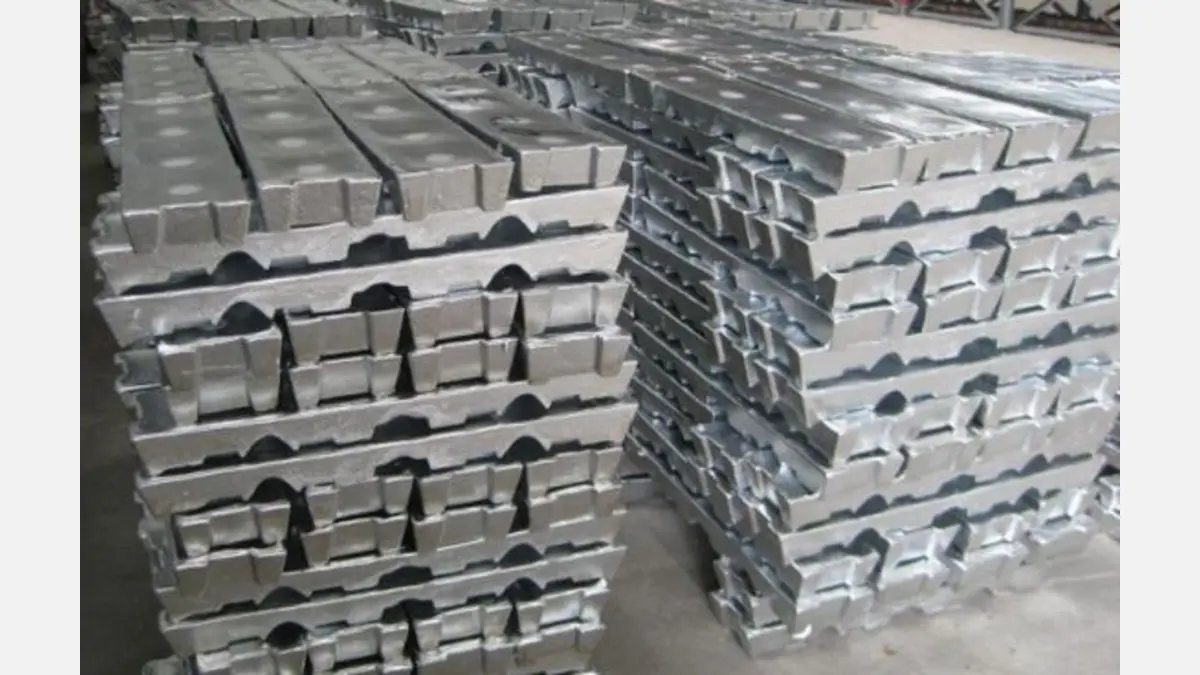
Image Credit: inoxcast.com

A380.0 is a high-pressure die-casting aluminum alloy in the Al-Si-Cu family. Its 7.5–9.5% silicon content gives excellent fluidity for filling detailed dies, while 3.0–4.0% copper contributes useful strength and hardness. The alloy is widely used for general-purpose die cast components where a practical balance of castability, machinability, heat transfer, and mechanical performance is needed. Typical examples include automotive housings and brackets, electrical enclosures, appliances, and hand or power-tool bodies. Compared with more corrosion-focused die-casting alloys, A380.0’s copper content makes protective finishing and service-environment assessment especially important.
| Chemical Composition wt.% | ||
|---|---|---|
| Element | Min | Max |
| Silicon | 7.5 | 9.5 |
| Iron | — | 1.3 |
| Copper | 3.0 | 4.0 |
| Manganese | — | 0.50 |
| Magnesium | — | 0.10 |
| Nickel | — | 0.50 |
| Zinc | — | 3.0 |
| Tin | — | 0.35 |
| Other elements, total | — | 0.50 |
| Aluminum | Remainder | |
Composition notes
- Other elements, total: Total of unspecified elements.
Registered AA composition limits for A380.0 die castings are reported below in weight percent. Aluminum is remainder. The listed 0.50% limit for “other elements” is a total limit; elements not individually specified should not be interpreted as permitted at 0.50% each.
Reported values are typical datasheet values for A380 die-cast material; actual properties depend on casting geometry, section thickness, porosity, process control, and test location. Conditions were not further stated in the cited datasheets unless noted.
Use the button to switch between Metric and US Customary units.
| Physical Properties | Metric |
|---|---|
| Density | 2.76 g/cm³2.76 g/cm³ |
| Mechanical Properties | Metric |
| Modulus of elasticity | 71.0 GPa |
| Hardness | 80 Brinell |
| Ultimate tensile strength | 324 MPa |
| Yield strength | 159 MPa |
| Elongation | 2.5 % |
| Thermal Properties | Metric |
| Coefficient of thermal expansion | 21.1 × 10⁻⁶ K⁻¹ |
| Thermal conductivity | 109 W/(m·K) |
| Specific heat capacity | 963 J/(kg·K) |
| Electrical Properties | Metric |
| Electrical conductivity | 23 % IACS |
Test conditions & data notes
- Density: Reported physical-property value; condition not stated.
- Modulus of elasticity: Reported physical-property value; condition not stated.
- Hardness: Reported mechanical-property value; condition not stated.
- Ultimate tensile strength: Reported mechanical-property value; condition not stated.
- Yield strength: Reported mechanical-property value; condition not stated.
- Elongation: Reported mechanical-property value; gauge length not stated.
- Coefficient of thermal expansion: Reported physical-property value; temperature range not stated.
- Thermal conductivity: Reported physical-property value; temperature not stated.
- Specific heat capacity: Reported physical-property value; temperature not stated.
- Electrical conductivity: Reported physical-property value; temperature not stated.
Material Conditions & Tempers
A380.0 is principally supplied and specified as a die-cast alloy rather than as a wrought temper product. Published property data commonly describe the as-cast die-casting condition. Because casting quality substantially affects tensile performance and leak-tightness, procurement specifications should state the casting process, critical section requirements, and any required inspection or property acceptance criteria.
As-cast die casting: Typical reported mechanical-property condition for A380 die-cast material. Reported elongation is 2.5%; actual results vary with casting soundness and section thickness.
Advantages & Limitations
| Advantages | Limitations |
|---|---|
|
|
Processing & Fabrication
| Process | Description |
|---|---|
| High-pressure die casting | A380.0 is particularly suited to high-pressure die casting because its silicon content promotes fluid flow into detailed cavities. Design gates, runners, vents, and overflows to limit entrapped gas and shrinkage porosity, especially in sealing faces and heavily machined regions. |
| Machining | The alloy is used for machined die-cast housings, bores, threads, and mounting features. Specify realistic machining allowances and avoid locating critical sealing or load-bearing features in areas susceptible to porosity. |
| Finishing and protection | Cleaning, conversion coating, painting, powder coating, or other qualified protective systems may be used where appearance or corrosion resistance is required. Evaluate finishing on representative production castings because surface quality influences results. |
| Joining | Where welding is considered, qualify the procedure on production-representative die castings. Internal gas porosity can complicate fusion welding; mechanical fastening is often preferred for structural assembly. |
Applications
A380.0 is selected for high-volume, geometrically complex die cast parts that benefit from strong, rigid aluminum construction and efficient production. Its broad use reflects its balanced casting and mechanical characteristics rather than optimization for one specialized property.
- Automotive engine, transmission, and gear-case components: The alloy can produce rigid, complex housings and brackets with useful strength and efficient high-volume die-casting capability.
- Electronic, communications, and electrical equipment housings: Die casting enables integrated ribs, bosses, shielding enclosures, and detailed mounting features; the alloy also provides useful heat-transfer capability.
- Hand and power-tool housings: A380.0 combines hard, durable cast structure with machinability for interfaces, bores, and threaded features.
- Appliance and lawn-equipment housings: It supports economical production of durable near-net-shape covers, frames, and structural housings.
- Furniture and general industrial hardware: Its fluidity permits detailed shapes and integrated functional features that would otherwise require multiple fabricated parts.
Standards & Designations
| Designation | Value | Description |
|---|---|---|
| Aluminum Association | AA A380.0 | Registered aluminum die-casting alloy designation; composition limits are listed in the Aluminum Association Pink Sheets. |
| EN designation listed by datasheet | EN AC-46500 | Listed as an alternative designation on the cited A380 datasheet; verify the governing product specification before treating designations as interchangeable. |
| UNS designation listed by datasheet | A13800 | Listed as an alternative designation on the cited A380 datasheet; confirm required chemistry and delivery condition in the applicable specification. |
Frequently Asked Questions
What makes A380.0 suitable for die casting?
Its 7.5–9.5% silicon content provides high fluidity, helping molten metal fill intricate die cavities. The alloy also provides a practical combination of strength, hardness, machinability, and production economy for general-purpose pressure die castings.
Is A380.0 a good choice for corrosion-resistant outdoor service?
It can be used outdoors when the design and protective finish suit the environment, but its 3.0–4.0% copper content is a corrosion-resistance trade-off. For severe exposure, compare lower-copper alternatives and validate the chosen coating system.
Can A380.0 die castings be heat treated to increase strength?
A380.0 is commonly used in the as-cast die-casting condition. Any heat-treatment route should be specifically qualified because die-cast porosity and entrapped gases can cause distortion or blistering during heating, and properties depend strongly on casting quality.
References & Data Notes
- (n.d.). Aluminum Association, Designations and Chemical Composition Limits for Aluminum Alloys in the Form of Castings and Ingot (Pink Sheets 2025). https://www.aluminum.org/sites/default/files/2025-10/Pink%20Sheets%202025.pdf
- (n.d.). Xometry, Aluminium 46500 / A380 / Al-Si8Cu3 datasheet. https://xometry.au/wp-content/uploads/2021/12/Aluminium-A380.pdf
- (n.d.). Gabrian, A380 Aluminum Alloy: Properties and Benefits for Casting. https://www.gabrian.com/a380-aluminum-alloy
Chemical composition is taken from the Aluminum Association registered A380.0 casting-alloy listing. Property values are reported datasheet values for A380 and should be treated as typical rather than guaranteed design minima. Confirm applicable specification, casting process, test method, and acceptance criteria with the supplier.